
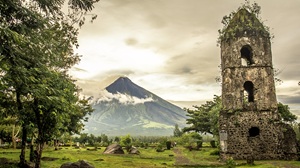
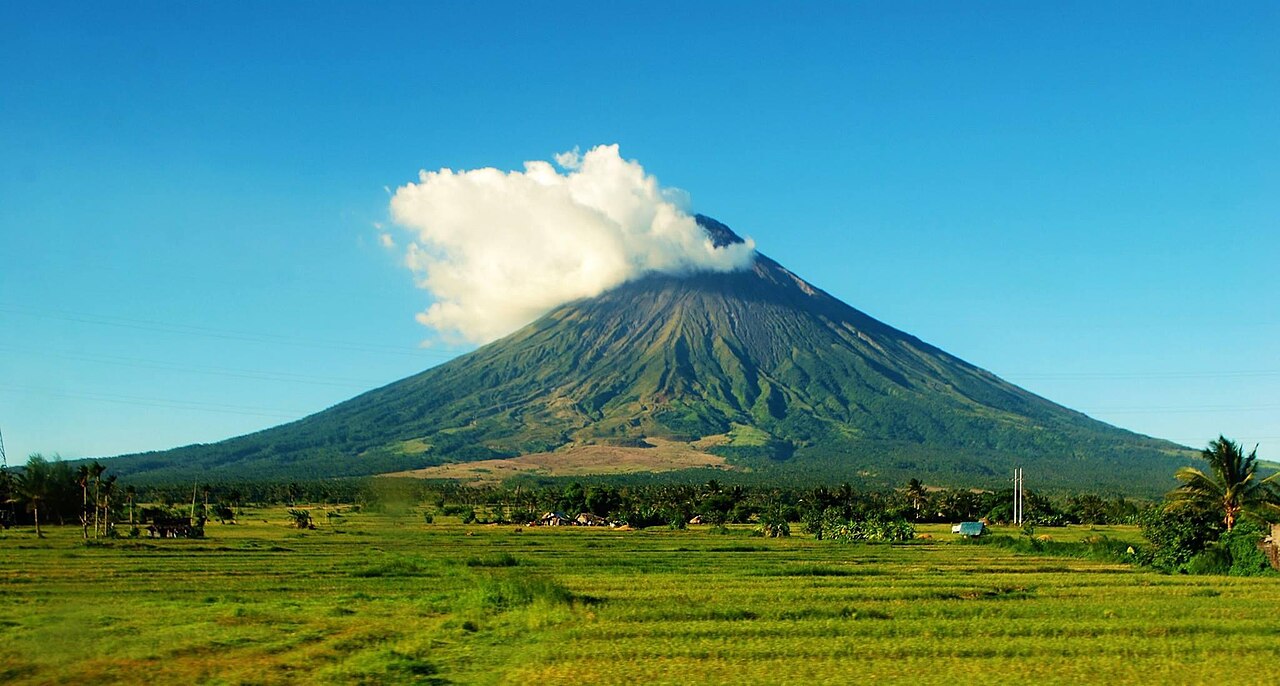
Cagsawa Ruins is the image most people carry home from Albay: a weathered bell tower standing alone in a green field, with Mayon Volcano rising behind it. The site is simple, open, and photogenic — but it is also a grave reminder of one of the Philippines' deadliest volcanic eruptions.
What happened at Cagsawa
The original Cagsawa church was built by Franciscan missionaries in the town of Cagsawa. On February 1, 1814, Mayon erupted violently. Lava, ash, and volcanic debris buried the town and the church. Only the bell tower and a few fragments of the church walls survived above the new ground level.
The ruins now sit in Daraga, near the base of the volcano. They are a national historical landmark and a place of remembrance, not just a photo stop.
What to see and do
The main draw is the bell tower itself. Walk around it slowly and notice how the volcanic stone has aged. Information markers explain the history, and the surrounding park has grassy areas, snack stalls, and souvenir shops.
Most visitors spend 30 to 60 minutes here. The site is compact, so it works well as a first stop on a Daraga-Camalig day trip. If you are interested in the broader story of Mayon, combine the ruins with the nearby National Museum of the Philippines – Bicol, which has geology and archaeology exhibits.
The best time to visit
- Early morning: Softer light, fewer crowds, and a better chance of a clear summit before clouds build.
- Late afternoon: Warm light on the tower and a dramatic sky, though the mountain can disappear behind cloud.
- Weekdays: Quieter than weekends and holidays.
The dry season from roughly December to May is generally the best window for clear views, but Albay weather is unpredictable. A cloudy forecast is not a reason to skip the site — the ruins are atmospheric in any weather.
Practical tips
- Bring cash for entrance fees, parking, and snacks. Small vendors may not accept cards.
- Wear comfortable shoes. The ground is uneven in places, especially around the ruins.
- Respect the memorial. Do not climb on the protected structure, and follow all posted rules.
- Watch your belongings in crowded photo areas.
- Ask before taking portraits of local vendors or visitors.
How to get there
Cagsawa Ruins is in Daraga, roughly 15 to 25 minutes by tricycle or car from central Legazpi City, depending on traffic. Many drivers offer a short heritage loop that includes Daraga Church and Cagsawa. Agree on the route and fare before leaving.
Pair it with these stops
- Daraga Church, a volcanic-stone Baroque church with its own Mayon view.
- Sumlang Lake in Camalig for a slower, reflective view of the volcano.
- Quitinday Green Hills for a short trek and layered landscapes.
- Farm Plate Daraga for a meal in a garden setting.
Cagsawa is famous for a reason, but it rewards travelers who arrive with a little context. Give it time, read the markers, and let the story of the place sit alongside the photograph.